Start with a matched pair, not two different styles
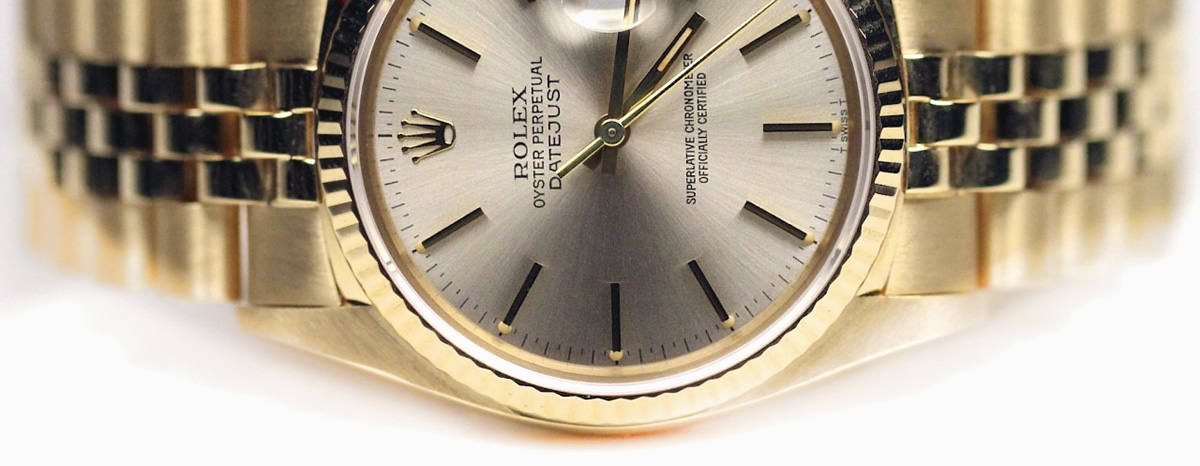
Rolex references 126234-0013 and 126334-0004 provide a useful design baseline. Both have a silver dial, fluted bezel, Jubilee bracelet and date display. Keeping those features constant makes it easier to consider the size direction without simultaneously changing the watch's visual texture.
| Field | Datejust 36: 126234-0013 | Datejust 41: 126334-0004 |
|---|---|---|
| Published case diameter | 36 mm | 41 mm |
| Dial | Silver | Silver |
| Bezel and bracelet | Fluted; Jubilee | Fluted; Jubilee |
| Original material configuration | Oystersteel and white gold | Oystersteel and white gold |
| Original movement | Rolex 3235 | Rolex 3235 |
| Dimensions still needed for a replica fit decision | Actual case height, effective span and usable bracelet settings | Actual case height, effective span and usable bracelet settings |
The stated diameters differ by 5 mm. They do not supply the difference in dial opening, effective span or bracelet range for a replica. In particular, an older Datejust II description should not be treated as the current Datejust 41 just because both are called 41 mm. Keep the complete reference generation in the comparison.
Evidence scope: the table describes genuine design references, not supplied replica dimensions or materials. The worked fit example below is entirely hypothetical. Manufacturer facts and the invented observations have different jobs: one identifies the intended design; the other demonstrates how a decision follows from fit information.
Measure the parts of fit that the size label leaves out
Use a watch you already find comfortable as the baseline. Keep the wrist position, bracelet tension and measurement method consistent. A phone's close wide-angle view can enlarge the near side of a case; use measurements and a level, more distant view rather than deciding from a dramatic wrist shot.
- Case diameter. With protected caliper tips and light contact, measure across the case body excluding the crown. Note the contact points and whether the number refers to the case body or bezel. Keep the same definition for the second watch.
- Lug-to-lug length. Measure from the outer tip of one case lug to the opposing tip along the twelve-to-six direction. This describes the rigid case, not the bracelet's ability to bend.
- Effective span. Look from above at the fitted watch. If a fixed end-link section extends beyond the lugs before the bracelet can drop, include that projection in a separate end-to-end measurement. This is often the more useful span for wrist overhang.
- Overall height. Include the lowest point of the case back and the highest point of the crystal. A measurement of the case flank alone misses what rests on the wrist or catches a cuff.
- Usable bracelet fit. Note the smallest achievable fitted setting and the actual settings around your comfortable fit. “Removable links” is less useful than knowing whether the clasp can sit centrally at the chosen length.
These measurements explain different sensations. A long rigid span can overhang even when the diameter looks modest. A watch that is too loose can rotate, making the case look oversized and the clasp sit awkwardly. Tightening a bracelet may improve stability, but it cannot shorten a rigid end link.
If you lack suitable measuring tools, use a ruler beside the watch for an approximate plan view and label it approximate. Avoid deriving millimetres from an image without a scale in the same plane. The inspection record keeps methods beside the resulting numbers.
Worked fit decision: the larger case wins for a specific reason
Hypothetical teaching example; all measurements and observations in this table are invented. The reader has a 160 mm wrist circumference and, from wearing an existing watch, prefers an inner fitted circumference of roughly 166–170 mm with that bracelet profile. This personal range is not a recommended allowance for other wrists. The reader likes a silver dial, fluted bezel and Jubilee-style bracelet, and initially prefers the smaller case.
| Field | Candidate A: 36-style | Candidate B: 41-style | Interpretation |
|---|---|---|---|
| Dial, bezel and bracelet appearance | Silver; fluted; Jubilee-style | Silver; fluted; Jubilee-style | Style is held constant. |
| Measured effective span | 44 mm | 47 mm | Both sit within the wrist's upper surface in this invented fit observation. |
| Smallest available fitted circumference | 174 mm with the available links and clasp | 156 mm | A cannot reach the reader's preferred fit range in the supplied configuration. |
| Actual fitted setting tried | 174 mm; case rotates and clasp moves off-centre | 168 mm; case and clasp remain centred | B is the successful fitted arrangement. |
| Date reading | Readable at the reader's usual distance | Readable at the same distance | No calendar-reading reason overrides the fit result. |
| Choice | Set aside in this bracelet configuration | Choose B for this reader | A could be reconsidered if a compatible shorter bracelet arrangement were actually available. |
The conclusion is not that 41 fits a 160 mm wrist better in general. It is that this particular 36-style bracelet cannot achieve the needed fit, while the larger candidate can. If both reached the same comfortable setting and the larger case overhung, the choice would reverse. This is why circumference charts alone cannot decide the question.
Change the bezel or bracelet only after settling the size direction
A fluted bezel creates many narrow highlights; a smooth or domed surround produces broader reflections. Compare them under the same ordinary light. Highly diffuse catalogue lighting can make one finish look quieter than it does when the wrist moves.
For bracelets, the link pattern is only the first observation. Follow where the bracelet begins to bend around the wrist, then inspect underside edges and clasp position. More individual link sections can change the way a bracelet articulates, but the actual joint construction and edge finishing determine how a given example feels.
- If you want a quieter appearance: compare the same dial in a smooth or domed bezel before changing its colour.
- If light-catching texture is the priority: compare fluting and the bracelet's polished sections while moving both through the same light.
- If the case shifts at a desk: inspect fitted length and clasp balance before blaming the case size or changing bracelet names.
A close-up can show fluting regularity and obvious surface marks. Articulation and pressure against the wrist need a moving view or a fit observation. Keep those two kinds of comparison distinct without assuming that Jubilee-style always feels softer or Oyster-style always feels sturdier.
What a specific movement description changes here
Current genuine Datejust 36 and Datejust 41 models use Rolex 3235. A description such as “ETA 2824-2 base, Datejust-style decorated rotor” makes a different claim. In that hypothetical wording, ETA is the claimed maker, 2824-2 the claimed base calibre, and the decorated rotor an appearance detail. It describes a date-capable base, not a Rolex 3235.
The date disc and its printing must then line up with the particular dial opening. An added calendar overlay or other display adaptation, if fitted, adds its own geometry and clearance requirements. A base calibre's name does not specify the complete display assembly. This is especially useful when comparing a small and large case that share a movement description.
| Observed pattern | Interpretation | Action |
|---|---|---|
| All checked numbers look displaced in the same direction, including in square-on views. | There is a repeatable relationship between the display and window to inspect. | Save comparable views of 8, 15 and 28 and describe the direction of the offset. |
| 8 and 15 are readable, but 28 touches an aperture edge. | One good date is insufficient to judge the wheel's printing and placement. | Keep the affected number visible in the comparison rather than substituting the best-looking date. |
| Front-on date is clear, but reflections obstruct it at the reader's normal angle. | The complete lens, crystal and lighting arrangement is inconvenient for that reader. | Prefer the candidate that is easier to read in the same ordinary lighting, if the other required features match. |
Use movement-specific instructions for calendar correction and setting; the function guide explains the sequence. The broader label guide handles origin and clone terminology so those general definitions need not decide the fit comparison.
Choose Datejust when the date and the bezel/bracelet choices supply the features you want. For a full weekday window, move to the Day-Date calendar guide; for a rotating bezel, compare the Submariner reference families.
Reference notes
- Rolex, Datejust 36, reference 126234-0013, and Datejust 41, reference 126334-0004: silver dial, fluted bezel and Jubilee configurations. Checked 15 October 2026.
- Rolex Newsroom, Datejust collection information: calibre 3235 in the current 36 and 41 models. Checked 15 October 2026.
- ETA, 2824-2 current product record: central hands, date, quick correction and stop-seconds. Checked 15 October 2026.