Start with this arrival sequence
- Check the configuration: put the saved item description beside the watch. Compare the model layout, dial, bezel, bracelet and Date or No-date display before altering the bracelet.
- Photograph the condition: use stable daylight or soft, diffuse indoor light. Take a front view directly above the dial, both sides, the back and the clasp. Keep the watch identifier and date with the photographs.
- Look for obvious damage or loose parts: check the crystal, case edges, bracelet connections and clasp. A clasp that will not remain closed is a reason to pause wearing and resolve it before continuing.
- Check fit and dimensions: use the measurement definitions below. Do not compare a nominal case-size label with a different measurement and call the difference a defect.
- Observe normal functions: first identify the hands and visible calendar. Use controls only under the correct instructions for the actual mechanism and watch.
- Keep a simple running log: compare the same reference clock at the start and finish of a stated interval. Use the worked daily-rate calculation rather than judging rate from one reading.
The first three steps are useful before any resizing or repair. They preserve the received condition and often settle a straightforward wrong-item question without an internal inspection.
Measure four different dimensions consistently
A soft-jaw calliper is useful when handled gently. Set it to millimetres, check that its zero closes correctly, and protect the surfaces from the measuring jaws. Support the watch on a soft, stable surface; do not squeeze a crystal or drag metal jaws across a finish.
| Dimension | How to measure | What to write beside the number |
|---|---|---|
| Case diameter / width | For a round case, measure across the case body on the stated axis, excluding the projecting crown. Keep the jaws square to that axis. | Axis used; crown excluded; whether crown guards affect the reading. For a shaped case, call it width rather than assuming a circular diameter. |
| Total thickness | Measure from the highest crystal surface to the lowest caseback surface with the jaws aligned through the watch, keeping the bracelet out of the measurement. | Crystal and caseback included. A domed crystal's highest point matters. |
| Case lug-to-lug | Measure the outer tip of the lug at the top of the case to the outer tip at the bottom, along the watch's length. | The two case-lug endpoints; do not silently add bracelet parts. |
| Effective rigid span | Observe where the bracelet can first bend down at each end. If rigid end links project beyond the lugs, measure that longer non-bending span separately. | End links included, with a side view showing the first articulating links. |
A watch can have a moderate case diameter yet occupy more wrist length because its end links extend outward. Conversely, a nominally larger case may have a shorter lug span. Compare these dimensions separately, then try the bracelet at a suitable length without allowing the watch to fall.
With only a millimetre ruler, a square-on view can provide a rough screening estimate. Perspective, the ruler's distance from the case and rounded surfaces reduce precision. Label the result an estimate and use a better measurement before disputing a small difference. There is no invented millimetre tolerance in this guide.
Look at specific details, then choose the appropriate check
| Item | Ordinary non-destructive observation | Needs the identified operating instructions | Needs specialist examination or testing |
|---|---|---|---|
| Dial and date window | Photograph directly above the dial. Note whether a numeral touches an edge or appears partly hidden; compare another viewing angle to recognize parallax. | Observe other calendar positions only using the correct setting method or natural operation. | Investigating persistent alignment or calendar faults internally. |
| Hands | Watch normal movement and record apparent contact between hands, a visible rubbing mark, a stalled indication or repeatable hesitation. | Moving through further hand positions using the correct time-setting operation. | Determining hand clearance or the cause of interference. |
| Clasp and bracelet | Use the closure as designed and check that it remains secured in ordinary handling. Look for visibly shifting connections. | Any specific adjustment mechanism or clasp sequence supplied for that watch. | Repairing a closure or securing suspect connections. |
| Bezel | Compare visible markings and alignment with the agreed configuration. | Checking rotation direction, detents or locking behaviour where the actual bezel mechanism is specified. | Investigating a loose or binding assembly. |
| Material and water use | Record colour, finish and visible moisture, if present. | The watch's actual operating and use instructions. | Material identification or a documented pressure test for this watch. |
A square-on date photograph is a better starting point than an angled wrist image. Magnifiers and curved crystals can change how a digit appears, so keep both the straight view and an angle that shows the effect. Describe the location and appearance before assigning a cause.
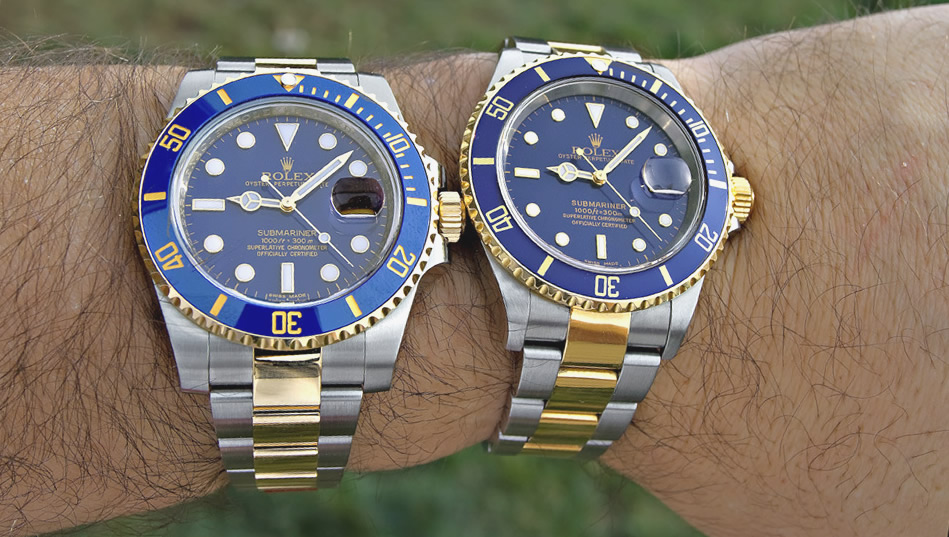
For a Day-Date layout, examine the weekday as well as the date; one readable word does not describe all seven positions. For a Submariner layout, begin with whether the agreed configuration has a date window. The Datejust comparison adds bezel and bracelet details.
An observation should lead to a specific next step
| Observation | First action | What helps resolve it |
|---|---|---|
| Wrong dial, bracelet or Date/No-date configuration | Keep the received state and save a clear comparison before resizing or swapping parts. | Send the supplier the saved agreement and the corresponding arrival view, identifying the exact difference. |
| Clasp will not stay closed or a connection visibly shifts | Pause wearing and secure the watch safely. | A repairer or supplier should examine the closure/connection before use resumes; avoid improvised force tests. |
| Apparent hand rubbing, repeated stalling or internal moisture | Pause wearing and arrange professional examination. Avoid adding water, heat or force while investigating. | Photographs or a short video showing the condition, its timing and the affected area. |
| Minor finish or colour difference | Compare under consistent light against the saved description and photographs. | State the affected area and whether it is an agreed-detail difference or your own preference. |
| Material composition not documented | Keep composition Unverified while recording the visible colour separately. | Item-specific documentation or appropriate material examination if composition affects your choice. |
| Questionable rate or a shorter-than-expected run | Repeat the observation with the same clock and known preparation under the correct instructions. | A complete start/end log; professional assessment if a persistent symptom remains. |
| Pressure resistance unknown | Leave it Unverified; do not create a home immersion test to settle the question. | An appropriate specialist test and its conditions, tied to the watch examined. |
These actions do not assume a particular seller's return or repair policy. Preserve the relevant description and terms, then address the actual discrepancy or fault before making alterations that would change the evidence.
Two completed examples of useful inspection notes
Both cases below are hypothetical teaching examples. They are not Watchfora purchases, customer reports or tests of the watches photographed on this site.
Example 1: a Date display supplied instead of the agreed No-date layout
| Field | Completed entry |
|---|---|
| Agreement saved | 15 October 2026 item description: black dial, black bezel, No-date display. |
| Observed on arrival | The received watch has a date window at 3 o'clock. |
| Evidence saved | The saved item description and an arrival front photograph taken directly above the dial showing the date window. |
| Status | Differs: the calendar configuration does not match the agreement. |
| Action | Keep the bracelet and watch unaltered; report the specific Date/No-date mismatch to the supplier with the two records before treating it as the agreed item. |
Example 2: a matching colour does not resolve composition
| Question | Saved description and observation | Status | Next step |
|---|---|---|---|
| Is the agreed colour present? | Description says gold-coloured case. Arrival views under diffuse light show the corresponding yellow-gold colour. | Matches for visible colour. | Keep the front and side photographs with the description. |
| What is the case made of? | The description supplies no composition record; no material test has been performed. | Unverified for composition. | Do not relabel it solid gold from colour. Obtain item-specific material information or appropriate examination if this is essential to the choice. |
The second case has two results because it asks two different questions. A single overall score would conceal the unresolved material issue.
A short worksheet for your own watch
Give the watch one identifier and retain the description date, arrival date and evidence location with it. Use Matches for a particular supported detail, Differs for a documented conflict and Unverified when the available observation cannot settle that question.
| Stage / item | Agreed detail | Actual observation and evidence | Status | Next action |
|---|---|---|---|---|
| Your item | Your saved description | Your dated observation | Matches / Differs / Unverified | A specific action, or no further action for this detail |
For internal labels and rate arithmetic, continue to the movement guide. For a design shortlist, use the Rolex overview or the Seamaster family comparison.
Method notes and references
- Watchfora inspection method, 15 October 2026: the measurement definitions, statuses and non-destructive sequence are stated in this article. They are an editorial comparison method, not a certification standard or completed laboratory test.
- MIYOTA, Cal. 8215 Instruction Manual, current product-linked file checked 15 October 2026; no printed revision/date shown. Its controls apply to the identified 8215 example discussed in the movement guide.
- ETA SA, ETA 7750 operating instructions 414900, version 01-1, printed 26 January 2012. Used in the movement guide as a named-mechanism example, rather than universal instructions for every watch.